
Sponsored Advertisement

Prime Minister Matthew Wale has issued a deeply personal warning about the growing threat climate change poses to the artificial island communities of Langalanga Lagoon and Lau Lagoon in Malaita Province.
Speaking about the impact of rising sea levels and extreme tides on Pacific communities, Wale said the climate crisis was no longer an abstract global issue for Solomon Islanders but a daily reality affecting his own people.
Wale, who represents Aoke/Langalanga Constituency, said he spoke not only as Prime Minister but as a son the islands and a representative of the saltwater people of Langalanga Lagoon.
“Allow me to speak plainly for a moment, not only as Prime Minister but as a son of these islands,” Wale said when opening the Pacific Climate Conference in Honiara this morning.
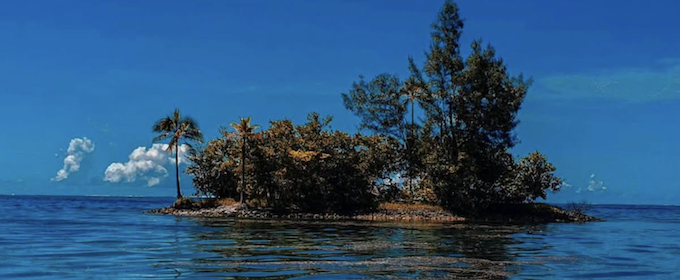
He said the people of Langalanga and Lau shared a unique cultural and historical inheritance, having built artificial islands by hand from stones placed over generations on the reef.
“Our peoples live on artificial islands that our ancestors built by hand, stone upon stone, upon the reef,” he said.
Wale said those islands were far more than places to live. They were places where generations of families had been born, married, made shell money and buried their dead.
However, he warned that climate change was now threatening the very foundations on which these communities have built their lives.
“Today, in Langalanga and in Lau alike, the wells are turning salty. King tides wash through kitchens and across the floors of homes,” Wale said.
He said families were increasingly being forced to confront a difficult question: whether they could continue living on the artificial islands or eventually move to the mainland.
“Families now sit in the evening and debate whether to hold on or to move to the mainland their ancestors deliberately left,” he said.
For Wale, the issue carries a personal significance.
“When I speak of climate change, I am not reading from a briefing paper. I am speaking of my own constituents, my own kin, and my own sea,” he said.
The Prime Minister also criticised dismissive attitudes towards communities experiencing the effects of climate change firsthand.
He said sarcasm and dismissiveness towards the concerns of atoll and lagoon communities were an insult to people whose lives were being directly affected.
“Their lived reality, not the comfort of the sceptic, must anchor our policy,” Wale said.
A threat to culture and identity
The situation facing Langalanga and Lau is not simply an environmental problem. The artificial islands are deeply connected to the cultural identity, history and way of life of their communities.
For generations, families have maintained their homes and communities on these man-made islands, surrounded by the sea that has also provided food, transport and livelihoods.
But saltwater intrusion, king tides, coastal erosion and other climate-related impacts are increasing pressure on these communities.
The deterioration of freshwater sources is particularly concerning because many artificial island communities have limited access to alternative sources of drinking water.
Wale’s warning therefore highlights a difficult reality facing Solomon Islands and other low-lying Pacific communities: climate change can threaten not only homes and infrastructure but also the ability of communities to remain on ancestral land.
“1.5°C is a survival threshold”
Wale said the Pacific could not afford to treat global warming as an inevitable or acceptable development.
“For the Pacific, 1.5°C is therefore a survival threshold and must remain a political red line,” he said.
He stressed that every fraction of a degree of warming mattered to vulnerable Pacific communities.
“Every fraction of a degree matters. Every year of delay increases the burden on our communities and our public finances,” Wale said.
He warned against allowing dangerous levels of warming to become normalised.
“We cannot allow dangerous levels of warming to be treated as normal or inevitable,” he said.
The Prime Minister also stressed the injustice at the heart of the Pacific’s climate-change position.
“The Pacific did not create this crisis, and our patience must never be mistaken for acceptance of a future imposed on us by the emissions of others,” Wale said.
What you think?
Sponsored Advertisement