
Sponsored Advertisement

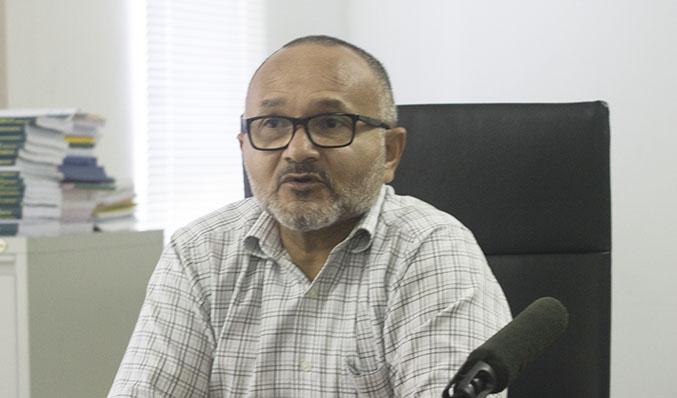
By: Martin B. Housanau (senior local economist)
-
Introduction:
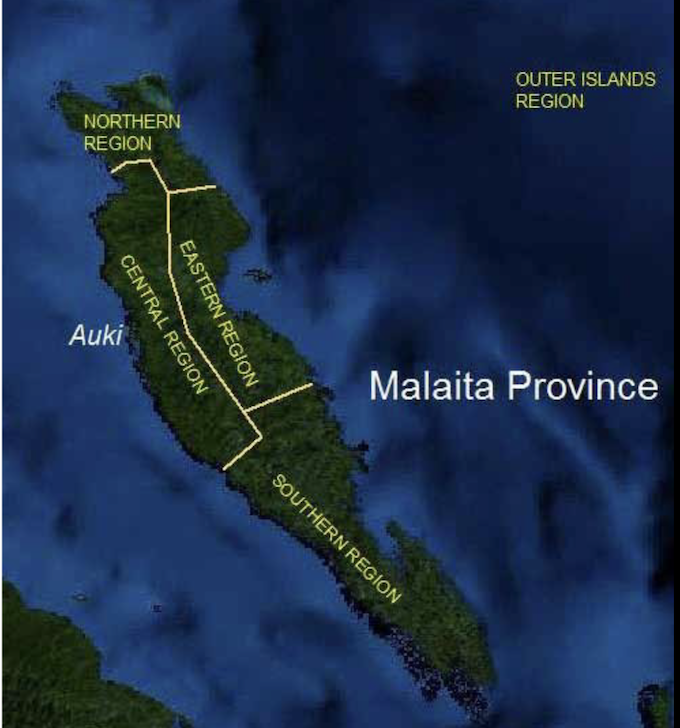
Malaita Province stands at a crucial turning point in its history. For too long, our people have carried the burden of underdevelopment, limited services, and lack of economic opportunity – despite our abundant natural resources, strong cultural identity, and resilient communities.
Similarly, since gaining independence in 1978, all the provinces in Solomon Islands as well faced ongoing challenges to development including deteriorating social services and declining rural economic development. The main reasons include political instability, limited financial resources, weak local governance capacity, centralized decision-making, poor infrastructure and services, geographical challenges, limited economic diversification, natural disasters and external shocks.
However, these factors combined have slowed progress, leaving many provinces underdeveloped and dependent on external support. Addressing them requires stronger provincial autonomy, better governance, infrastructure investment, and economic transformation – the core goals of the Malaita 10-Year Pathway.
-
Why Malaita Remains Underdeveloped?
Malaita is one of the most populated and resource rich provinces in Solomon Islands. But despite its strong human resources and cultural strength, it remains one of the least developed provinces in Solomon Islands due lack of government Investment, centralized government system, poor infrastructure, unemployment and migration, neglected after the tensions, weak provincial capacity, and lack of economic support.
It was obvious that Malaita like the rest of the other provinces in Solomon Islands remains underdeveloped because of decades of government neglect and the lack of political will to decentralize development into the rural areas and communities. However, Malaita has the potential to grow, but needs greater autonomy, better investment, and support systems to move forward.
-
The Malaita Economic Development Pathway:
The economic development pathway for Malaita over the next five years is critical for the stability of Solomon Islands and its serenity. As clearly stated in the past by one of our nation’s founding fathers, the late Hon. Solomon Sunaone Mamaloni, and I quote; “we must develop Malaita, in order to maintain stability and tranquility throughout our beloved nation Solomon Islands”.
The late Mamaloni made the statement based on his conviction that developing Malaita is a national responsibility, and it is not just about helping one province. But it helps prevent future problems, ensure fairness, strengthens the peace and unity of all Solomon Islands. It is obvious from the 2019 national population census, that Malaita accounted for 24% of the total national population, amongst the provinces, Malaita is the most populace province.
With nearly a quarter of the Country’s population, Malaita has significant human resources compared to the other provinces. Its large share of the population highlights why its development (or underdevelopment) matters strongly for national outcomes. Because the province is so populace, issues like service delivery, infrastructure, employment, and governance are particularly acute there.
Therefore, the Malaita 5-Year Development Pathway (2026 – 2030) is an innovative strategy to bring the much needed tangible economic development to Malaita and its people into the next decade. This is critical towards maintaining stability and economic growth of Solomon Islands. The key goals of the pathway are;
-
Autonomous Provincial Status; and
-
Sustainable Economic Transformation.
This plan is not about separation or conflict, rather it is about greater self-reliance, local decision-making, and stronger partnership between Malaita Province and its people with the national government and the development partners. It is a peaceful, legal, and inclusive process that will give Malaitans more control over their own resources, institutions and future. Over the next five years, this pathway will guide how Malaitans;
-
Build unity and legal foundations for autonomy.
-
Strengthen our governance systems.
-
Grow a strong local economy based on agriculture, fisheries and enterprise.
-
Empower our youth and communities to take ownership of development.
The future of Malaita is in our hands – all Malaitans. With commitment, unity and vision, we can create a province that is economically self-reliant, politically empowered, and proud of its role in a united Solomon Islands.
-
Short, Medium and Long-Term Plan (2026 – 2030):
This plan is broken into short-term (2026), medium-term (2027 – 2028), and long-term (2029 – 2030) steps. It’s designed to be peaceful, legal, and community-driven, using local strengths and realistic actions.
Short – Term (2026): Build Foundations
Goals:
-
Build community unity and awareness on autonomy.
-
Establish legal ground work.
-
Launch quick-impact economic projects.
Key Activities & Costs (SBD):
-
Community engagement and awareness
-
Forums, church meetings, media outreach throughout Malaita and the rest of provinces to educate Malaitans.
-
Cost SBD$410,000
-
Establish Autonomy Taskforce (MAWG)
-
Legal, Political, Cultural representatives
-
Cost SBD$285,000
-
Draft Autonomy Proposal & Legal Research
-
Legal experts prepare bill and framework.
-
Cost SBD$367,000
-
Small-Scale Economic Projects
-
Agriculture, Fisheries, Forestry, Tourism and SME training
-
Cost SBD$978,000
Total for Short-Term 2026 Estimates: SBD$2,040,000
Medium – Term (2027 – 2028): Negotiate & Build Capacity
Goals:
-
Submit autonomy proposal, begin formal negotiations.
-
Strengthen Provincial Institutions.
-
Develop Priority Economic Sectors.
Key Activities & Costs (SBD):
-
Lobby National Government & Parliament.
-
Political advocacy, stakeholder meetings.
-
Cost SBD$1,956,000
-
Capacity Building for Provincial Government.
-
Staff training, systems upgrade.
-
Cost SBD$2,608,000
-
Develop Agro-Processing & Fisheries, Forestry, Tourism & SME Training.
-
Identify leading small factories, cooperatives, equipment & training
-
Expand exports of copra, cocoa, timber, fisheries, kava.
-
Cost SBD$7,336,000
-
Basic Infrastructure Repairs.
-
Roads, markets, wharves
-
Cost SBD$4,890,000
Total for Medium-Term 2027 – 2028 Estimate: SBD$16,790,000
Long – Term (2029 – 2030): Implement Autonomy & Expand Economy
Goals:
-
Enact autonomy legislation and establish autonomous governance structures.
-
Scale up economic activities and revenue systems.
-
Develop workforce skills.
Key Activities & Costs (SBD):
-
Pass Autonomy Law and Setup Governance.
-
Legislative assembly, executive council, administrative bodies.
-
Cost SBD$1,793,000
-
Expand Export-Oriented Economy.
-
Support expansion of factories for value adding of coconut, cocoa, fisheries, timber, kava and others.
-
Increase production for exports of value added products and commodities.
-
Improve transportation links and network across Malaita with markets.
-
Cost SBD$10,596,000
-
Vocational Training & Youth Program.
-
TVET Centers, scholarships and apprenticeships.
-
Cost SBD$5,216,000.
-
Strengthen Revenue & Financial Systems.
-
Tax reforms, local revenue collection systems
-
Cost SBD$1,956,000
Total for 2029 – 2030 Estimate: SBD$19,561,000
Overall 5-Year Budget Summary (SBD)
Sponsored Advertisement

| Period | Focus Area | Estimated Cost (SBD) |
| 2026 | Foundation & Quick Economic Wins. | 2,040,000.00 |
| 2027 – 2028 | Negotiation & Capacity Building. | 16,790,000.00 |
| 2029 – 2030 | Autonomy implementation & Economic Growth | 19,561,000.00 |
| Total | 5 – Year Program | $38.391,000.00 |
-
Key Principles:
-
Ensure the process is peaceful, inclusive, and transparent.
-
Engage all Malaita communities: chiefs, churches, youth, women, and diaspora.
-
Seek partnerships with national government, donors, NGO’s to supplement funding.
-
Prioritize projects that generate local income and build long-term capacity.
-
Regularly monitor progress and adjust the plan as needed.
What you think?
Sponsored Advertisement