

Sponsored Advertisement

Graduating from the least developed country (LDC) category marks a major development milestone. It signals higher incomes and improvements in health and education. Yet for countries approaching the graduation threshold, optimism is often mixed with anxiety:
Will losing preferential trade access derail export growth? Will development assistance dry up?
With graduations underway across the Asia-Pacific region, including Bangladesh, Cambodia, Lao PDR, Nepal and Solomon Islands, answering these questions is of immediate policy relevance. Prompted by recurring inquiries regarding post-graduation setbacks, our recent working paper reviews the ex-post experiences of all eight graduated countries: Botswana, Cabo Verde, Maldives, Samoa, Equatorial Guinea, Vanuatu, Bhutan and São Tomé and Príncipe.
The core takeaway is clear: graduation is neither an automatic cliff nor a guarantee of resilience. Outcomes depend far more on underlying economic structures and domestic policy implementation than the status change itself. Successful transitions rely on building productive capacities and addressing structural vulnerabilities alongside sustained international support.
Our review offers a nuanced perspective on common concerns:
Concern 1: Graduation triggers an immediate trade shock
The reality: The trade impact has been remarkably contained.
A primary fear is “preference erosion” from losing Duty-Free Quota-Free market access available to LDCs. However, preference loss only affects exports that meaningfully utilized those preferences. Historically, supply-side constraints prevented many LDCs from extensively using them.
Earlier graduates experienced limited trade disruption due to country-specific factors. Botswana’s diamonds and Equatorial Guinea’s oil entered global markets at zero or near-zero Most-Favoured-Nation tariffs. Samoa, Vanuatu and Bhutan maintained market access through existing bilateral or regional frameworks independent of LDC status. In Cabo Verde and Maldives, tourism services — which do not depend on goods preferences — drove foreign earnings.
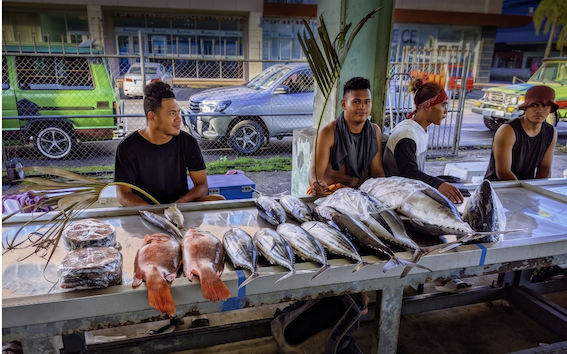
Where specific sectors were exposed, such as fisheries in Cabo Verde and Maldives, transition arrangements and alternative market-access provisions moderated impacts.
While preference erosion matters, its true significance depends on pre-graduation preference utilization, export structure, alternative market-access arrangements and productive capacity.
Concern 2: External development finance disappears
The reality: Experiences provide little evidence of an abrupt or uniform decline.
Development finance did not operate as an on-off switch. Aid flows evolved gradually based on income classification, debt sustainability, country vulnerability, donor priorities, existing project pipelines and, for some countries, status as small island developing States. While countries eventually phase out of some specialized LDC windows according to their transition arrangements, this is quite different from an abrupt withdrawal of overall development finance.
Financing terms may harden as incomes rise, but this reflects broader development and income-based criteria rather than graduation itself.
The experience varies considerably across countries, and for the most recent graduates, it is still too early to draw firm conclusions. Nevertheless, evidence so far shows no systematic post-graduation financing cliff.
The more persistent concern: Structural vulnerability
If trade and finance do not fall off a cliff, does that mean smooth sailing? Not quite.
The ex-post evidence reveals that crossing graduation thresholds does not eliminate underlying structural vulnerabilities. Regarding climate and natural shocks, Maldives and Samoa saw graduations delayed by tsunamis, while Vanuatu exited amid severe cyclones and COVID-19. Small island developing States remain on the frontlines of sea-level rise and environmental shocks.
Several graduates remain heavily reliant on a single commodity or sector, such as tourism, hydropower or extractives. Furthermore, while not caused by graduation, managing fiscal space and debt remains essential across shock-prone economies to finance development and climate-resilience needs.
Looking ahead: What this means for upcoming graduates
These experiences highlight some vital lessons for upcoming graduates:
-
Assess actual exposure to preference loss: Unlike earlier graduates, manufacturing exporters such as Bangladesh and Cambodia rely heavily on tariff preferences for garments. For these economies, managing preference erosion centers on firm-level productivity upgrades, modern trade logistics and regional trade integration.
-
Maintain focus on productive capacities and diversification: Graduation itself does not deliver structural transformation. Building competitive productive capacities, diversifying exports, strengthening skills and infrastructure and supporting movement into higher-value activities remain essential for reducing vulnerability over the longer term. Attention is also needed to ensure adjustment does not disproportionately affect vulnerable workers, including women employed in preference-dependent export sectors.
-
Operationalize smooth transition strategies (STS): National transition frameworks are most effective when designed as actionable implementation roadmaps. This involves integrating transition priorities directly into national development planning and annual budgets, backed by institutional oversight and risk scenario planning.
-
Align international support with vulnerability: Development cooperation remains essential after graduation, particularly because graduation does not imply the disappearance of structural vulnerability. Predictable transition periods and vulnerability-informed international assistance, including for climate adaptation and resilience-building, can help safeguard hard-won development gains while countries adjust to their post-LDC status.
Graduation marks clear progress, but lasting resilience depends on managing the transition beyond it. ESCAP provides demand-driven policy research, advisory and capacity building for graduating and recently graduated countries, funded in part by the China-ESCAP Cooperation Programme, to help formulate and implement effective smooth transition strategies.
—
Author:
-
Yusuke Tateno, Economic Affairs Officer, ESCAP
-
Mohammad Abdur Razzaque, Chairman of Research and Policy Integration for Development (RAPID)
What you think?
Sponsored Advertisement